Soft Wash House Washing in Salina, KS
Siding, stucco, and roofs cleaned with low pressure and the right solution. The algae dies. The house doesn't take a beating.
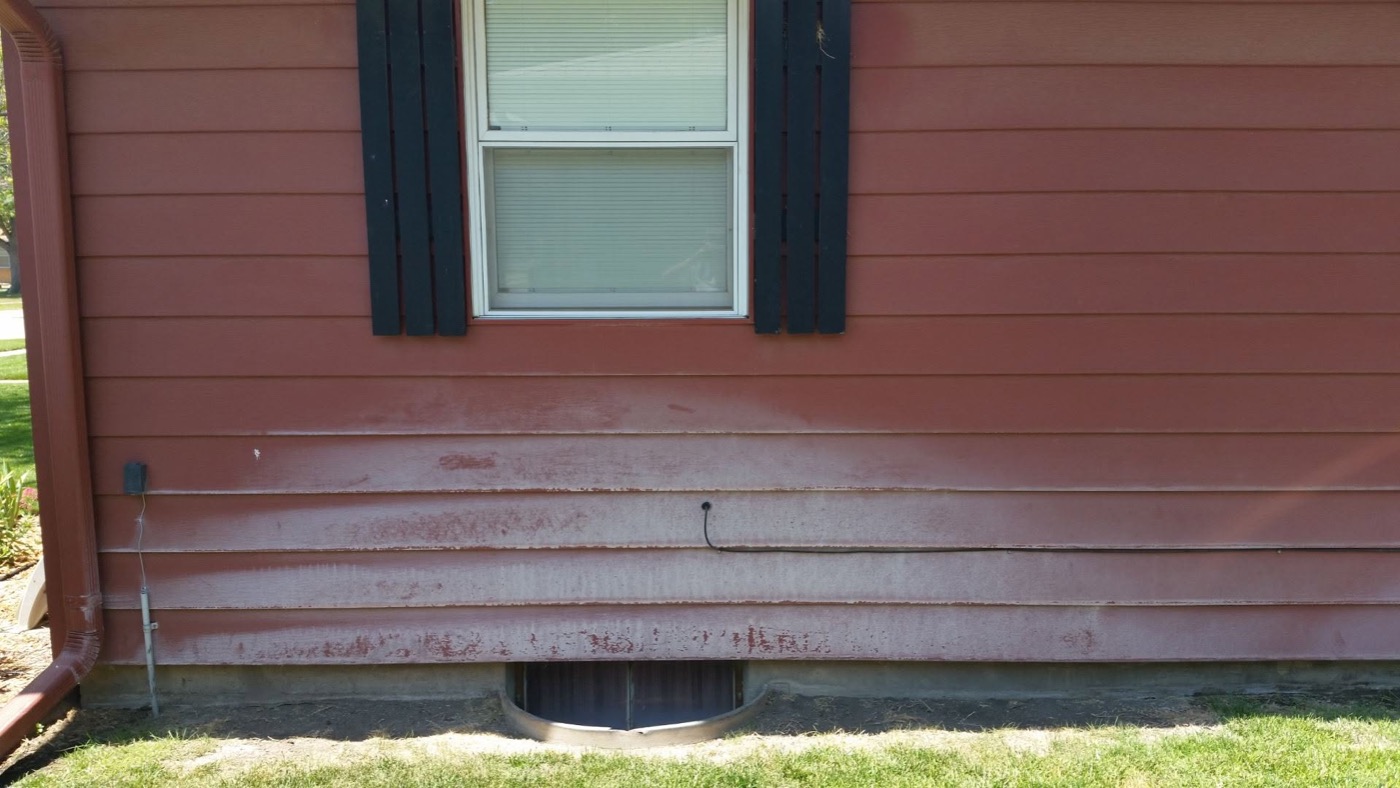 BEFORE
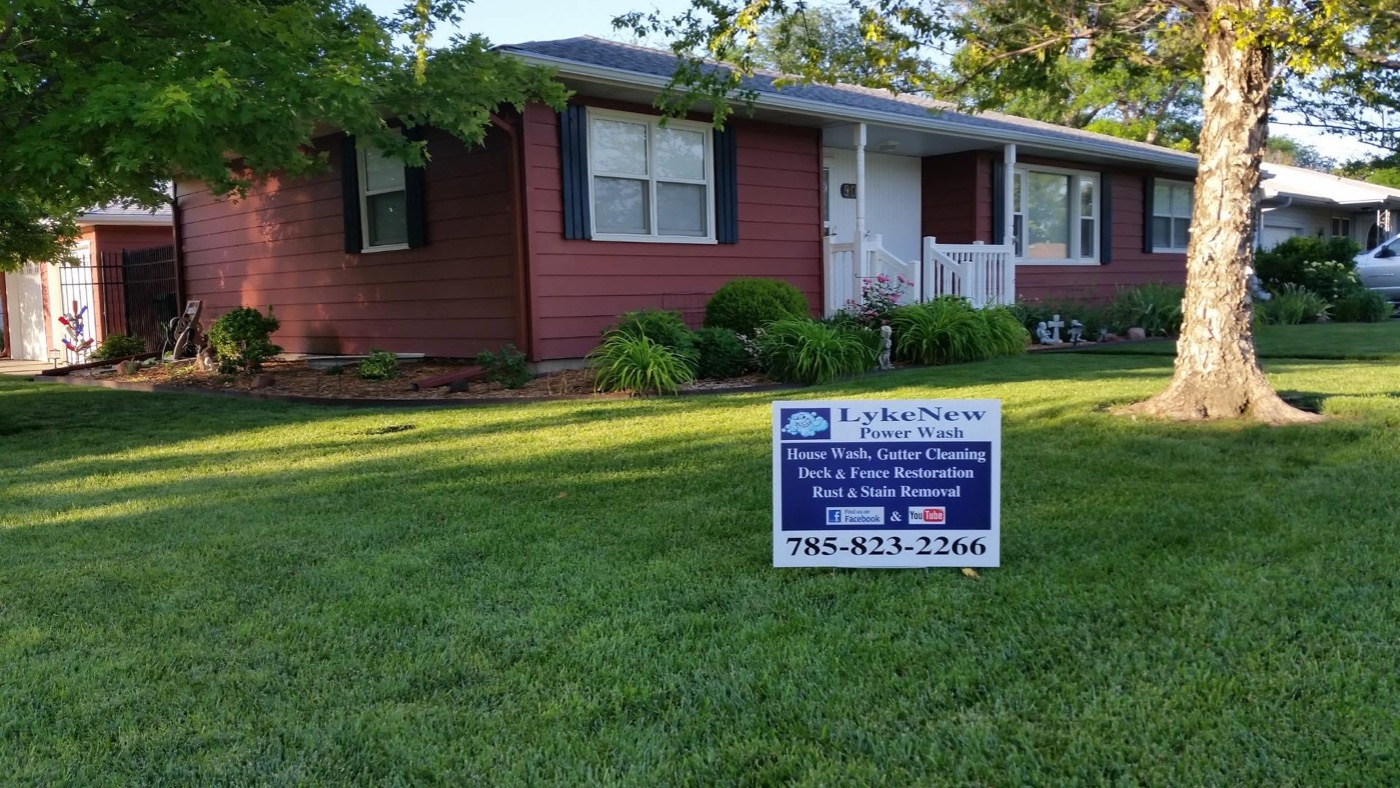 AFTER
AFTER
Surfaces on a residential wash
Soft washing vs. pressure washing
Both use a pressure washer. That is where the similarity ends. The difference is whether the surface is cleaned by force or by chemistry, and on most of a house, force is the wrong tool.
Soft wash
Pressure at the surface is comparable to a garden hose — roughly 60 to 100 PSI through a wide-fan tip. The cleaning is done by a dilute sodium hypochlorite solution with a surfactant, applied through the same pump at low pressure.
The solution kills the algae, mildew, and lichen at the root, dwells for a few minutes, and gets rinsed. Nothing is scoured off. Because the organism is killed rather than knocked loose, the surface stays clean substantially longer than a blasted one.
Pressure wash
Two to four thousand PSI through a narrow tip, removing material by impact. Correct for horizontal concrete: driveways, sidewalks, patios, dumpster pads, shop floors — surfaces that are hard, flat, and drain.
Pointed at a wall or a roof, the same force finds every seam and lap joint. It also leaves the organic growth behind, alive, in the pores it cannot reach. The house looks clean for one season and streaks again.
Why high pressure damages a roof — and can void the warranty
An asphalt shingle is a fiberglass mat saturated with asphalt and surfaced with ceramic-coated granules. Those granules are the shingle's UV protection and the reason it lasts. They are embedded in the asphalt, not bonded to it. High-pressure water strips them, and once they are in the gutter they do not go back on. The mat underneath begins aging at a rate the shingle was never rated for.
Water at 3,000 PSI also drives up under the shingle courses against the direction they shed, wetting the deck and the underlayment. Nail penetrations get pressurized. The damage is usually invisible on the day of the wash and shows up as a leak a year later.
Shingle manufacturers are direct about this. Their published cleaning guidance calls for low-pressure application of a cleaning solution and prohibits pressure washing; the industry standard most of them cite is ARMA's, which specifies a no-pressure chemical clean. Pressure washing a roof is grounds for denying a material warranty claim, and roofers can tell what happened from the granule loss pattern.
Why it is safer on siding
Vinyl siding is hung, not sealed. Every panel laps the one below it and every course has weep slots, because the assembly is designed to let incidental water out. High-pressure water aimed upward or sideways goes in through those same gaps, past the housewrap, into the sheathing cavity — where it has no path out and no airflow. That is how a cosmetic wash turns into a mold problem or a warped panel.
Low-pressure application rides the surface and rinses downward with the laps. It also does not chalk or dull aged vinyl the way a concentrated stream does, and it does not break the paint film on wood or fiber cement trim.
Why it is safer on stucco
Stucco and EIFS are porous and comparatively brittle. High pressure erodes the finish coat, opens hairline cracks into real ones, and on EIFS can breach the coating over the foam entirely. Any of those lets water into the wall assembly.
Soft washing lets the solution do the work in the texture, where a pressure stream would either skip over the growth or take the surface off with it. Same approach on brick with soft mortar joints, and on painted masonry.
What actually dirties a house out here
A house in Salina does not get dirty the way a house in Seattle does. Three local conditions do most of the work.
{{ l.title }}
{{ l.body }}
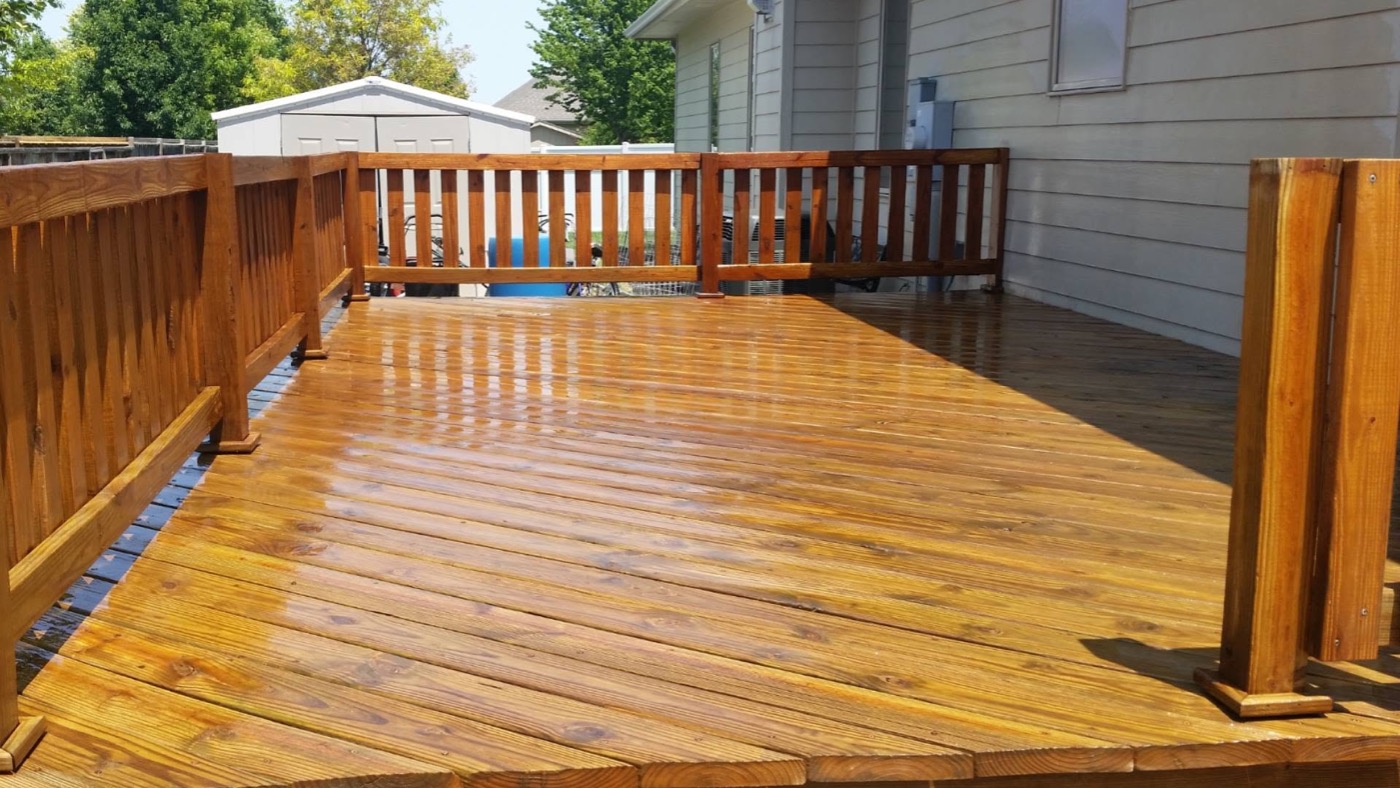
Cedar and treated wood, back to bare
Wood is its own discipline. Grey weathered fibre, mildew, and failed stain come off at pressure the board can take — enough to open the grain, not enough to fuzz it or cut lines across the deck. Then it dries and it is ready to seal.
- Wood cleaner applied and given dwell time.
- Washed with the grain at controlled pressure.
- Rinsed and left to dry to the right moisture content.
- Sealed or stained on a return visit if you want it.
Gutter cleaning is handled on the same visit as a house wash: gutters flushed and downspouts cleared while the ladder is already up.
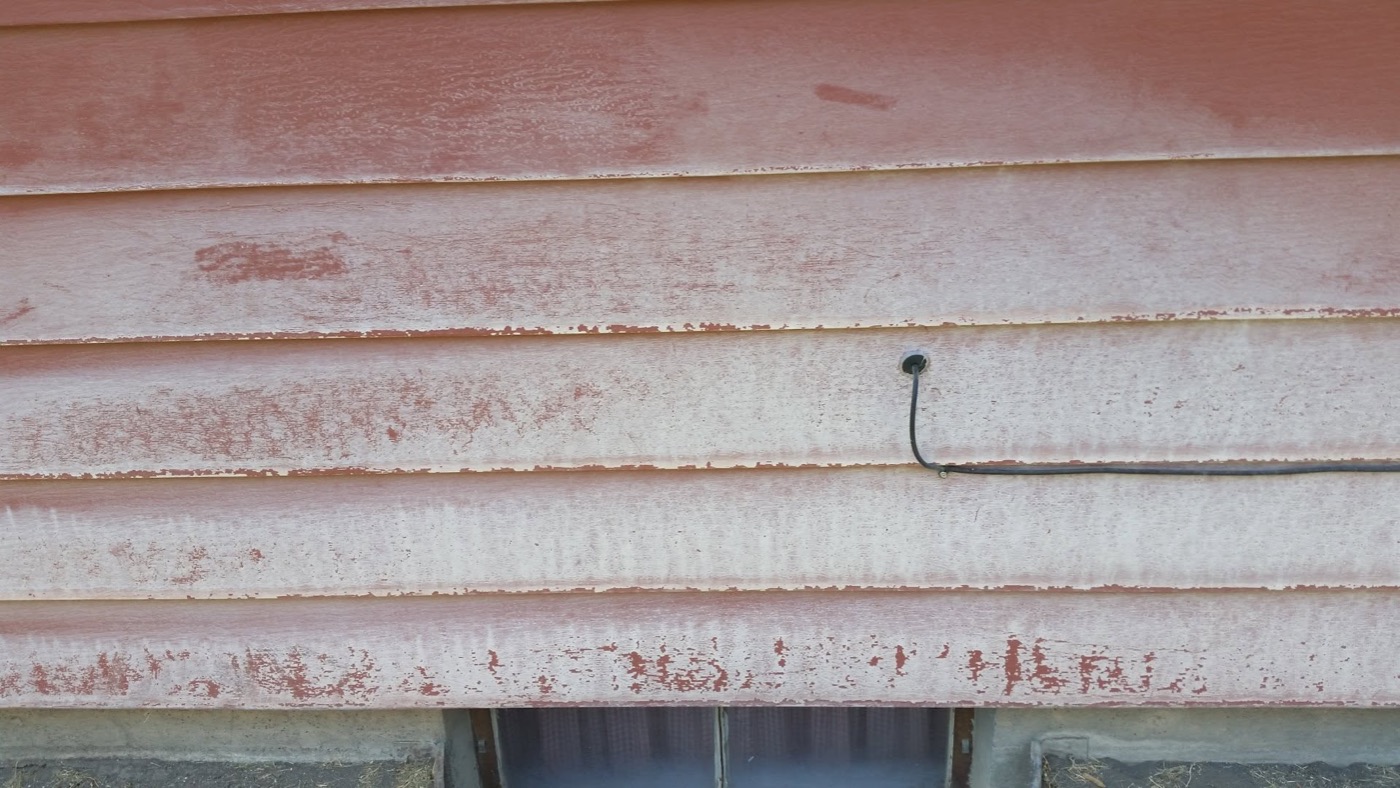
Residential before and after
Get your house washed
Tell me the siding type and which walls look worst. A photo of the north side is usually all it takes to quote.
785-823-2266Also cleaning concrete? See driveway and concrete cleaning — combining them on one visit is cheaper than two trips.